Quick answer
A firmly bonded, compatible coating may be cleaned, mechanically abraded, tested, and recoated. A peeling, soft, contaminated, unknown, or moisture-damaged coating generally should not be used as the foundation for a new decorative system.
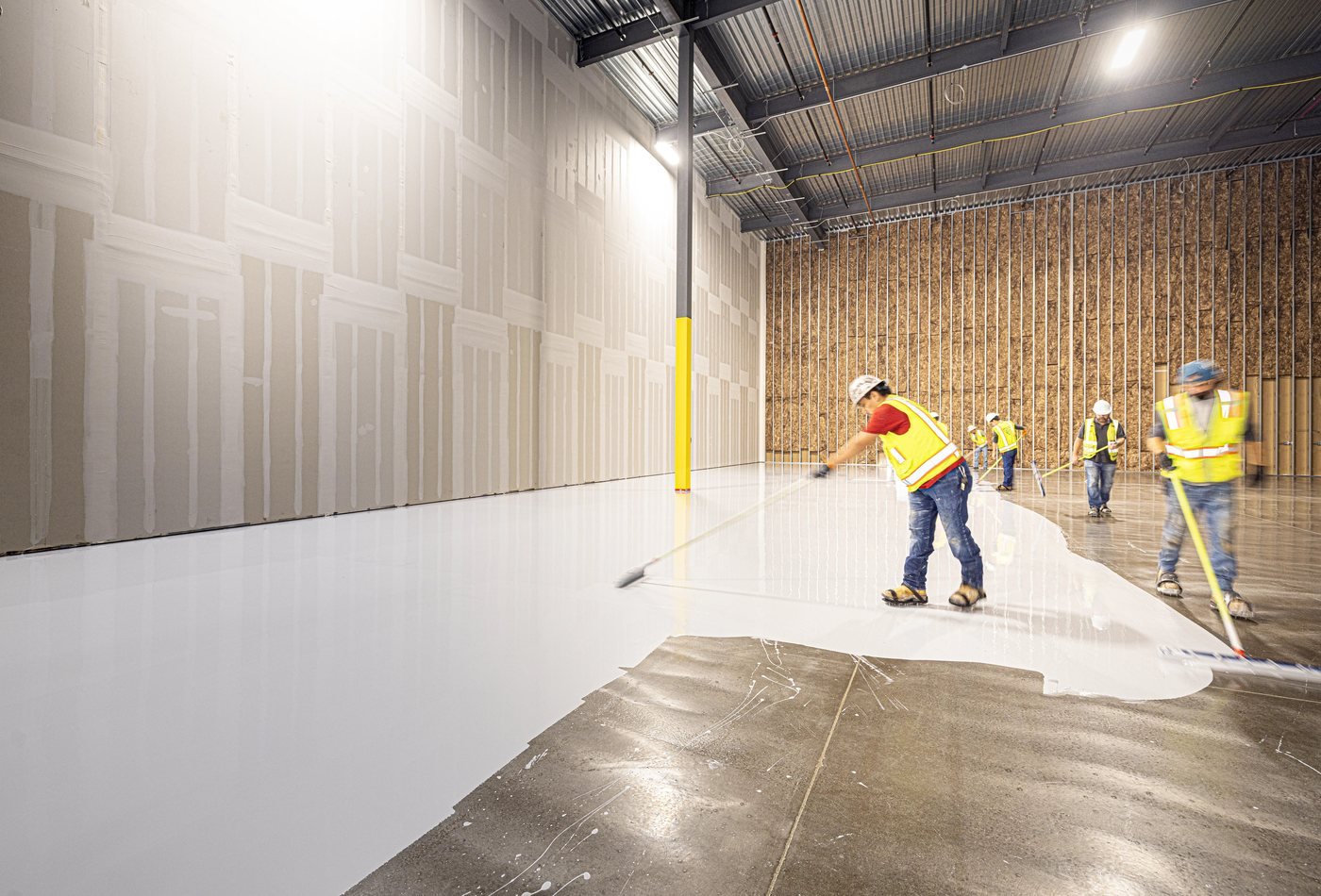
Sometimes you can recoat an existing floor, but “paint over it” is rarely the full process
A firmly bonded, compatible coating may be cleaned, mechanically abraded, tested, and recoated. A peeling, soft, contaminated, unknown, or moisture-damaged coating generally should not be used as the foundation for a new decorative system.
The decision is based on condition and compatibility, not simply age. A ten-year-old coating that remains tightly bonded may be a better candidate than a two-year-old coating already lifting under tires.
The existing material must be identified as accurately as possible
Garage floors may contain one-part acrylic paint, two-part water-based epoxy, high-solids epoxy, polyaspartic, urethane, clear sealer, penetrating sealer, wax, or multiple layers installed at different times. Each responds differently to grinding, solvents, and new coatings.
Product cans, invoices, installer records, and the appearance of a cut edge can help. When the chemistry is unknown, the safest approach is testing and conservative preparation rather than assuming every glossy floor is epoxy.
Adhesion testing helps determine whether the old layer is trustworthy
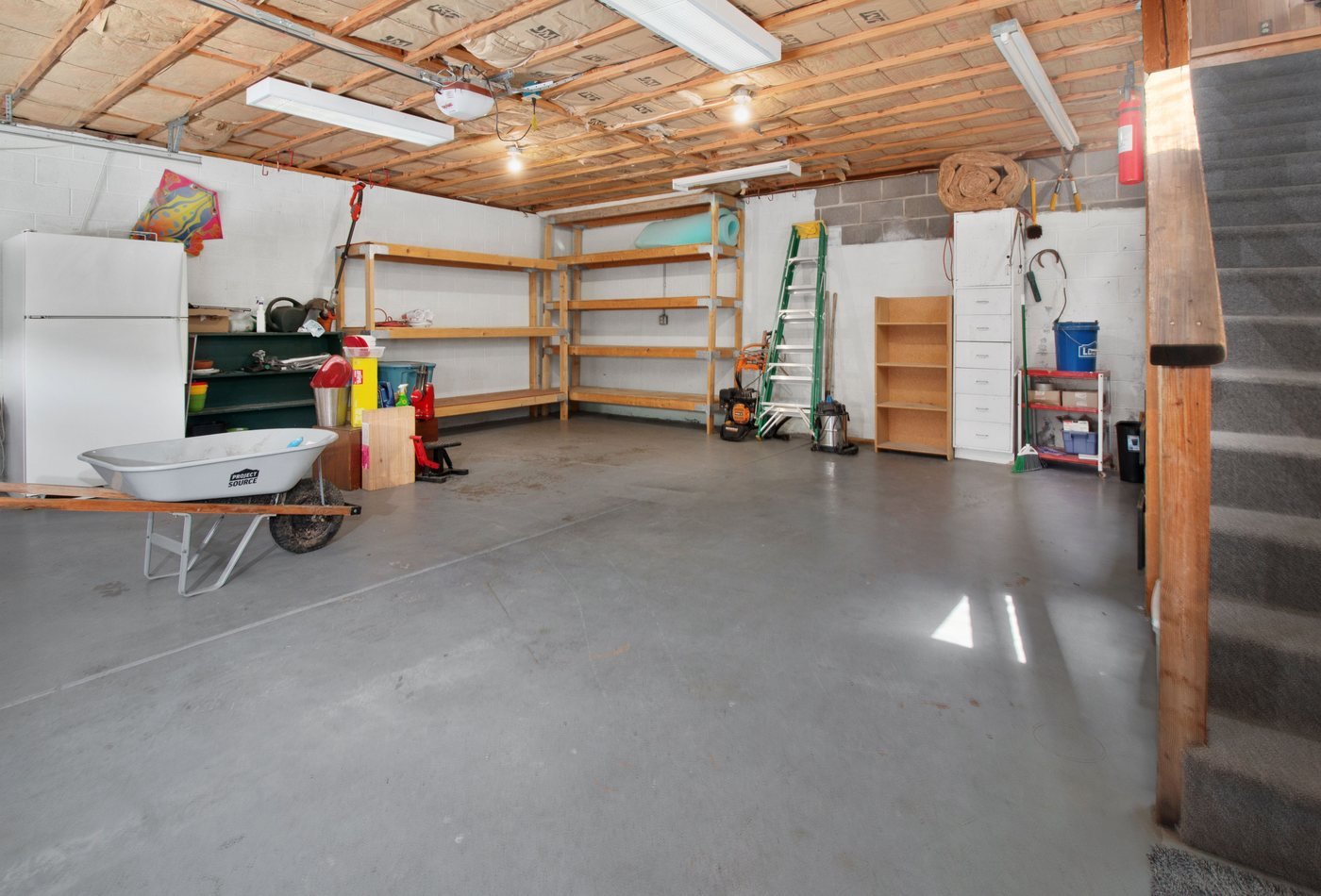
A coating can appear intact while being weakly bonded. Contractors may use cross-hatch cuts, pull-off testing, scraping, or aggressive grinding in sample areas to see where the system fails. The result should be evaluated in multiple locations, including tire paths and edges.
If the old coating separates easily from concrete, adding another layer only increases the weight on a weak bond. The new finish may look good temporarily and then peel with the original coating attached to its underside.
Peeling, bubbling, or soft material should be removed to sound substrate
Loose edges cannot be stabilized by clear coat. The failing material must be removed until the remaining surface is firmly bonded. If failures are widespread, complete removal is usually more predictable than patching dozens of isolated areas.
Soft or gummy coatings may load grinding tools and require specialized removal methods. The proposal should explain whether removal is included and how additional layers discovered during preparation will be priced.
Sealers can be invisible and still prevent bond
Penetrating or film-forming sealers reduce water absorption and can interfere with a new coating. A simple water-drop test can reveal reduced absorption, but it does not identify the sealer or guarantee that every area is free of it.
Mechanical preparation is normally used to remove surface sealers and open the concrete. Deeply penetrating treatments may require more evaluation. New concrete may also contain curing compounds that function like a sealer from the coating’s perspective.
Chemical compatibility matters between old and new layers
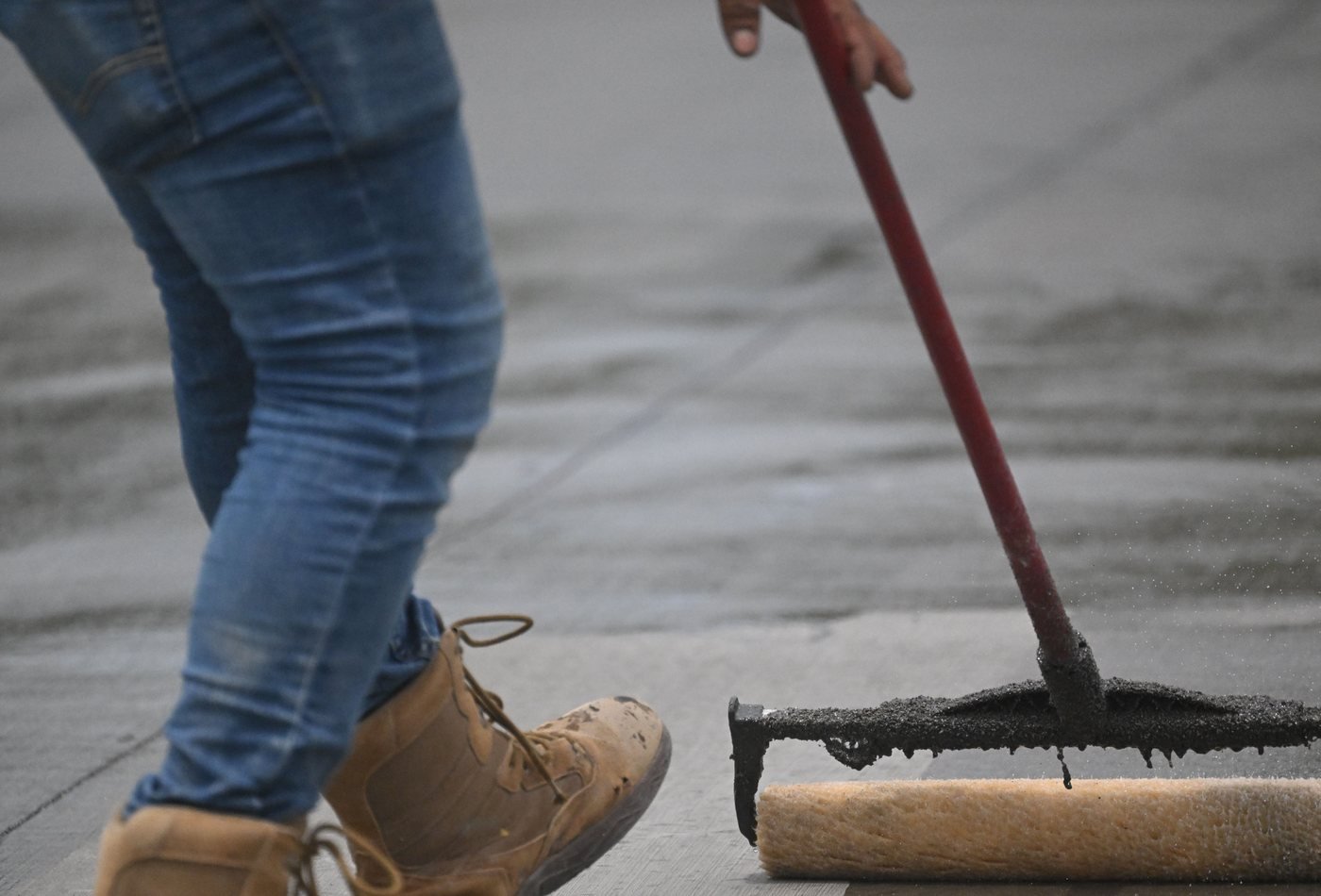
Some coatings can be recoated with another chemistry after cleaning and abrasion; others may soften, wrinkle, or lose bond when exposed to the solvents or reaction products in a new layer. Manufacturer guidance is important when mixing systems.
A small test patch can reveal obvious incompatibility, but it cannot overcome a weak substrate. Ask whether the contractor is using a manufacturer-approved recoat process or relying on general experience with an unknown floor.
The surface still needs a new mechanical profile
A cured coating is usually too smooth for reliable adhesion without abrasion. Sanding, diamond grinding, or another approved method creates microscopic texture and removes gloss, contamination, and weak surface material.
Cleaning should occur before and after abrasion so oil and silicone are not driven into the surface. Dust must be removed with industrial vacuuming rather than left as a bond-breaking layer.
Moisture problems do not disappear because the old coating is removed
If the existing coating bubbled or whitened because of vapor pressure, a new coating may repeat the failure unless moisture is evaluated. Removal exposes the slab for testing and can reveal dark areas, mineral deposits, or damp cracks.
The replacement system should be selected according to measured conditions and manufacturer limits. A moisture-mitigation primer may be recommended on some slabs, but it should not be treated as a universal cure for active water intrusion.
Partial removal can create visible transitions
When only damaged sections are removed, the remaining coating and bare repair areas may absorb primer differently or create slight elevation changes. Full-flake broadcast can help unify appearance, but careful feathering and build are still needed.
If appearance is important, ask how repair boundaries will be handled and whether a sample area can be reviewed. A solid-color gloss finish tends to reveal substrate variations more than a decorative flake system.

Removal cost can be worthwhile insurance
Grinding off an old floor adds labor, tooling wear, disposal, and time. That cost can feel frustrating when much of the coating still looks acceptable. However, preserving a questionable layer can put the entire new investment at risk.
Compare the price difference between a full removal and a recoat with testing. Ask each contractor to explain the risk they are accepting, what the warranty covers if the old layer fails, and whether the savings justify the uncertainty.
A written scope should state what remains and what is removed
The estimate should identify the existing finish, planned testing, removal method, repair allowance, abrasion profile, cleaning steps, primer, new layers, and warranty exclusions. Vague wording such as “prep floor as needed” makes quotes difficult to compare.
Photos taken after preparation and before coating can document the final substrate. For a homeowner, that record is useful because the most important work will be hidden once the new finish is installed.
Project checklist
Questions to ask before recoating an existing finish
- What do you believe the existing coating or sealer is?
- How will adhesion be tested in several parts of the garage?
- Which areas will be fully removed and which will remain?
- How will oil, silicone, wax, and tire dressing be addressed?
- Is the new system approved over the existing chemistry?
- Will the remaining old coating be excluded from the warranty?
- How will repairs and transitions be hidden in the final finish?
Frequently asked questions
Questions homeowners often ask
Can polyaspartic be applied over old epoxy?
It may be possible when the epoxy is firmly bonded, compatible, thoroughly cleaned, and mechanically abraded. Manufacturer guidance and test areas are important.
Do you have to remove all garage floor paint?
Many professional systems require removal because the paint can be the weakest layer. The contractor should expose sound concrete or verify that any remaining material is suitable to keep.
How can I tell whether my concrete has sealer?
Water-beading tests and grinding samples can provide clues, but they do not identify every penetrating treatment. A contractor should evaluate absorption and surface condition across the floor.
Will a new coating stop the old coating from peeling?
No. If the old layer is losing adhesion, the new layer can peel with it. Failing material must be removed to a sound substrate.
Technical references and further reading
Product data sheets and the coating manufacturer’s current instructions control the final installation. These sources provide useful background for comparing proposals.