Quick answer
Polyurea is a broad family of fast-reacting coating and elastomer chemistries. Polyaspartic coatings are commonly described as a specialized aliphatic polyurea technology designed to provide a more manageable working time along with fast cure, high solids, and good color stability.
Polyaspartic chemistry was developed to balance speed and application control
Traditional spray polyurea can react in seconds and requires specialized heated plural-component equipment. Polyaspartic formulations slow that reaction enough for rolling or squeegee application while still curing much faster than many conventional epoxies.
Working time varies widely by formulation and temperature. One polyaspartic product may offer a comfortable pot life, while another can become unworkable very quickly in a hot Florida garage. Product-specific data matters.
Fast cure can reduce downtime but increases execution pressure
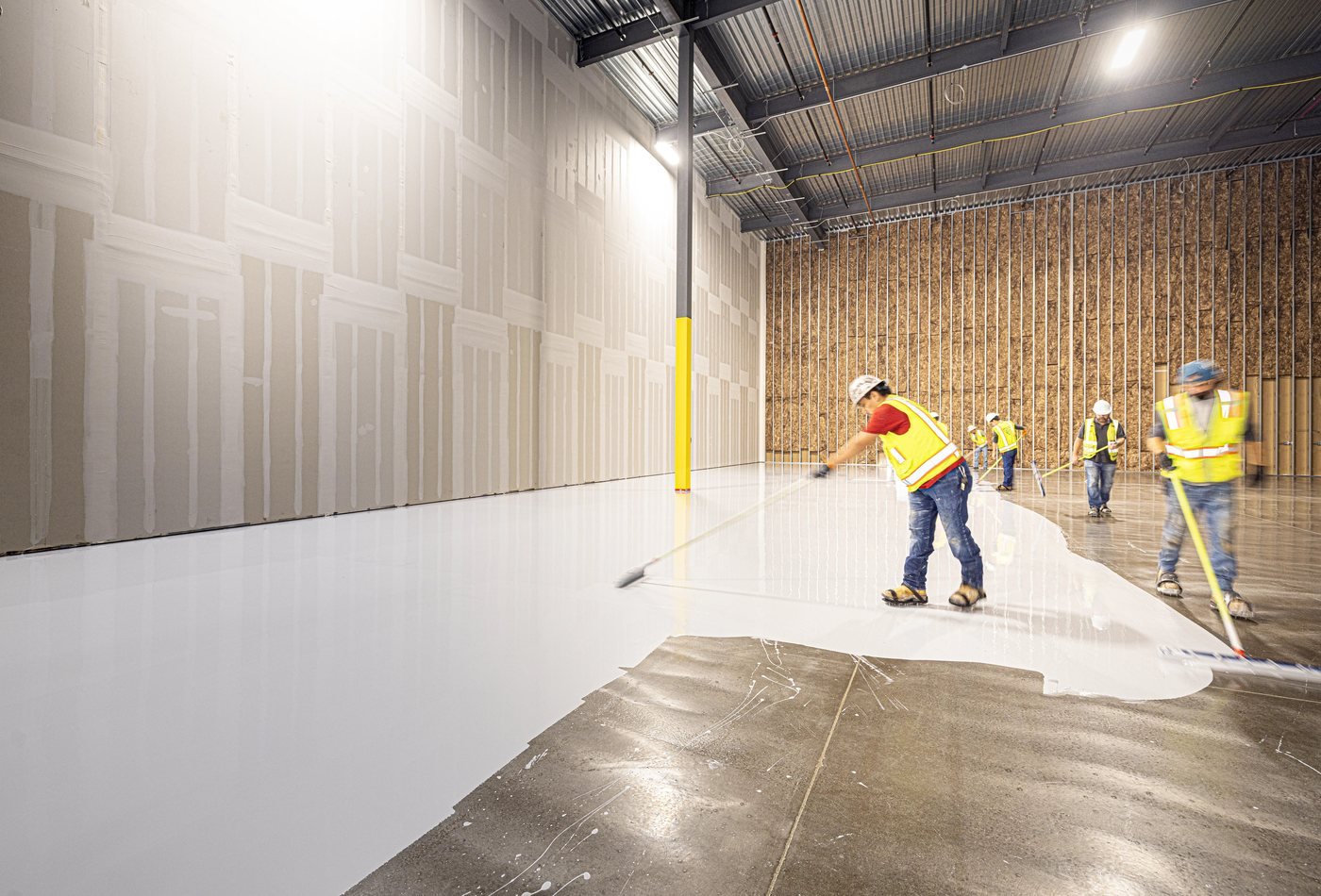
A fast-curing base or topcoat can allow multiple steps in one day and earlier return to foot or vehicle traffic. That is valuable for busy homes and commercial spaces. It also leaves less time to mix, spread, back-roll, broadcast flake, and correct mistakes.
Crew size, batch planning, square-foot calculations, and temperature control become important quality factors. A fast product does not forgive poor preparation or disorganized application.
UV stability is a common reason polyaspartic is chosen for topcoats
Many aromatic epoxies and some polyureas can change color when exposed to sunlight. Aliphatic polyaspartic topcoats are often selected because they resist yellowing and retain color better under UV exposure.
That benefit is especially relevant near open garage doors and on covered outdoor areas. However, every layer must be approved for the exposure, and a UV-stable clear coat does not automatically make an indoor-only base suitable for an open pool deck.
Adhesion begins with substrate preparation and primer choice
Contractors sometimes claim one chemistry “penetrates deeper” or bonds better in every situation. In practice, concrete profile, cleanliness, moisture, porosity, and the primer or base coat formulation determine adhesion. A premium topcoat cannot compensate for weak concrete or sealer left on the slab.
Some systems use epoxy primers because epoxy can wet prepared concrete and provide build. Others use polyurea or polyaspartic directly as the base. Ask why the specified system fits the actual slab.
Flexibility can help, but it does not stop concrete movement
Polyurea products are often promoted for flexibility. Greater elongation can help a coating tolerate impact or minor movement, but a thin film cannot bridge every active crack or expansion joint indefinitely.
Cracks and joints still need a deliberate repair or movement detail. Warranties commonly separate coating adhesion from future slab movement.
Abrasion and chemical performance depend on formulation and film build
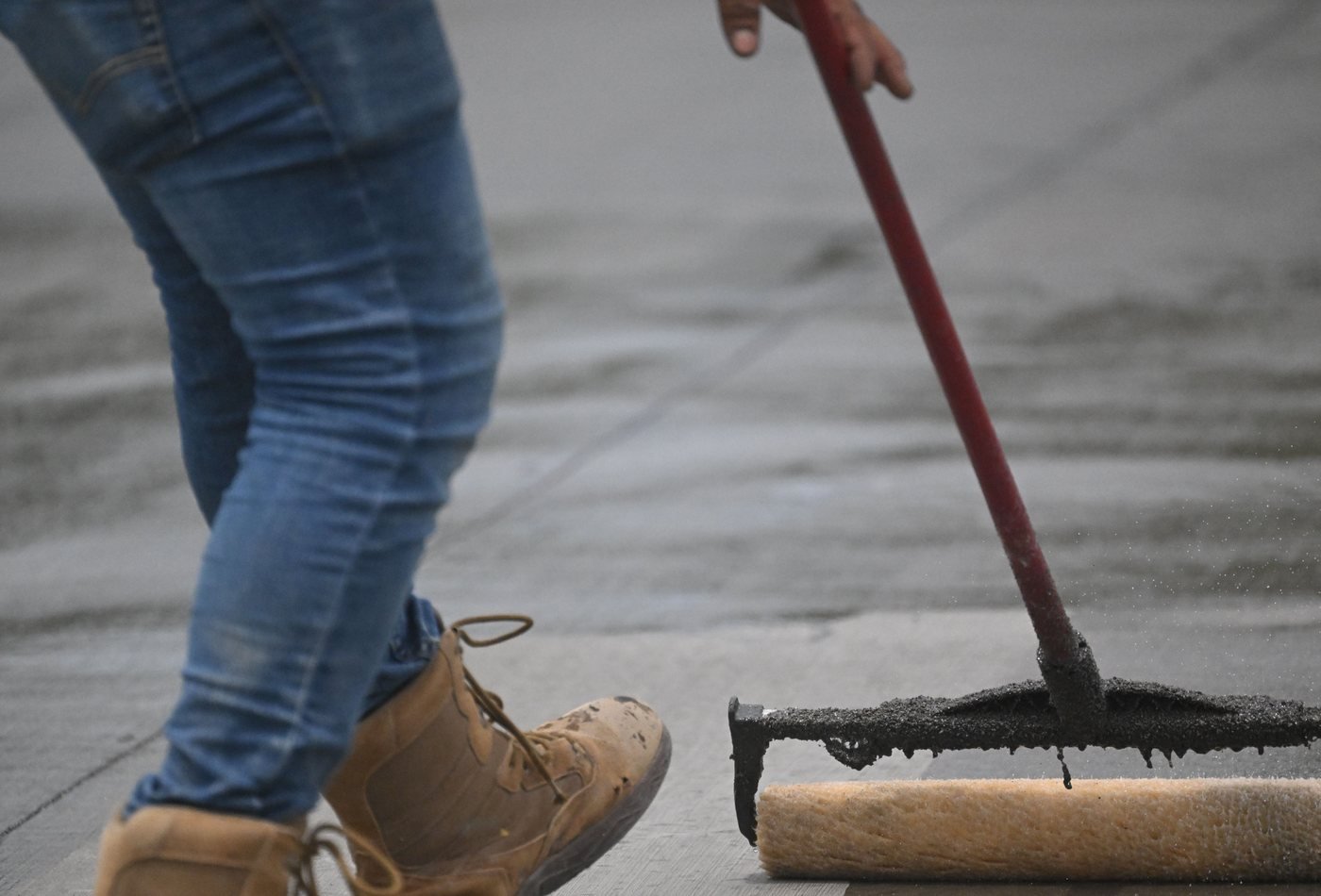
Polyaspartic coatings can offer strong abrasion, stain, and chemical resistance, which makes them useful as wear coats. Polyurea products can also be highly durable. The broad category name does not reveal resistance to every solvent, acid, brake fluid, or cleaner.
Review the manufacturer’s technical and chemical-resistance data for the exact product. Coverage rate, thickness, full cure, and prompt spill cleanup remain important.
Moisture tolerance during application can differ from moisture below the slab
Some polyurea formulations are less sensitive to ambient humidity than certain coatings, while others can react with moisture during application and create bubbles or defects. That is a jobsite chemistry question.
Moisture vapor moving through the concrete is a separate issue. The base coat or primer must be approved for the measured slab condition regardless of the topcoat’s resistance after cure.
A full-flake floor usually contains several functional layers
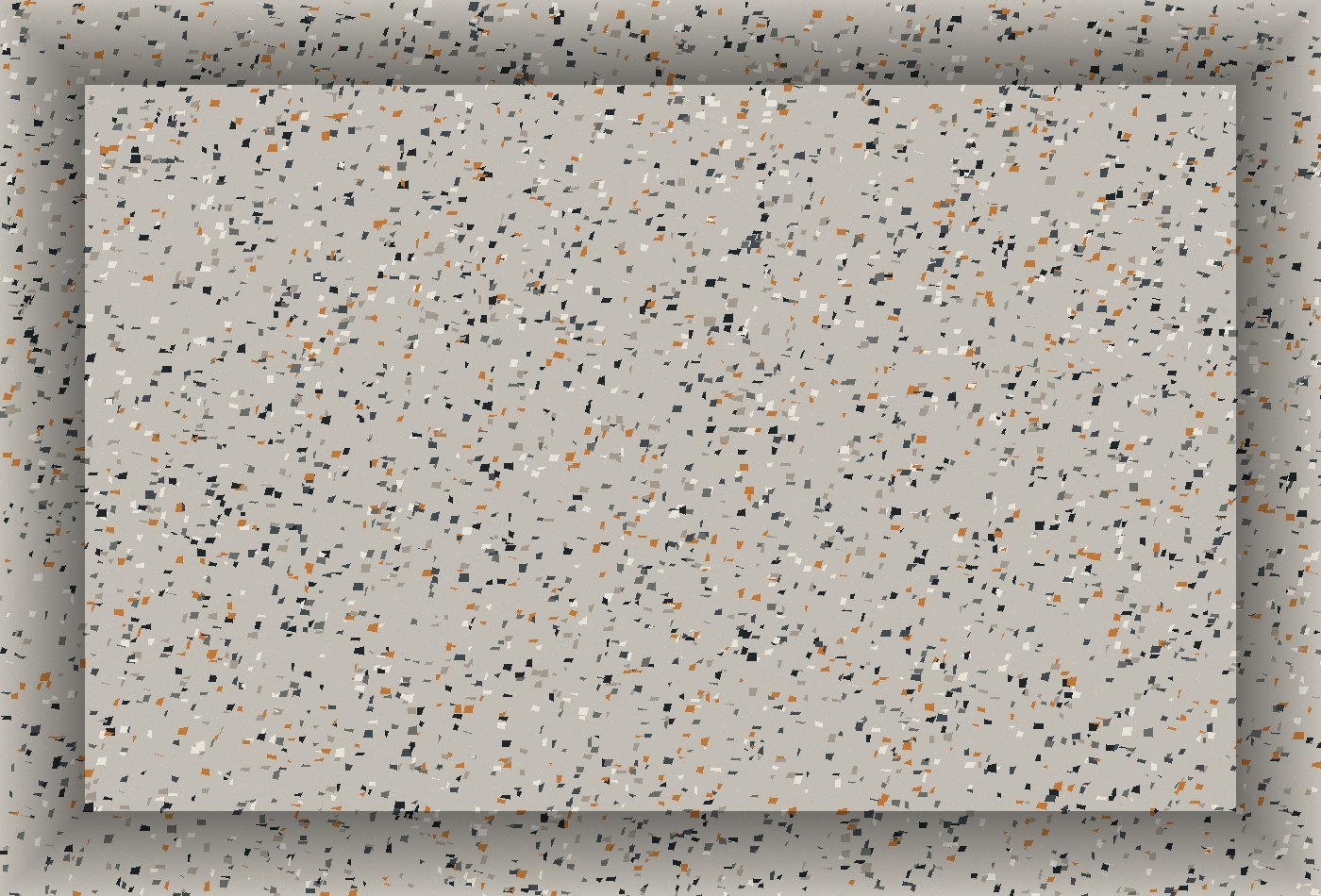
A common decorative system includes prepared concrete, a pigmented base coat, flake broadcast, scraping and vacuuming, then a clear topcoat. Some specifications add a primer, grout coat, or second wear coat.
The contractor should identify which layer is polyurea, which is polyaspartic, and whether any epoxy is used. That prevents the homeowner from comparing two quotes based only on a single buzzword.
Temperature has a major effect on pot life and cure
Warm material and warm concrete accelerate many reactions. In summer, a product advertised with a certain working time may cure much faster on the garage floor. Cool conditions can lengthen cure and change return-to-service timing.
Ask how products are stored, how slab temperature is measured, and how batch size changes with weather. A crew should not rely only on the thermostat inside the house.
Marketing comparisons can oversimplify the science
Claims such as “four times stronger than epoxy” often use a particular test, product thickness, or competitor formulation. Strength in one laboratory property does not answer adhesion, UV, scratch resistance, flexibility, or chemical exposure for your garage.
Request product data sheets and a complete system name. A credible contractor can explain the practical reason for each layer without attacking every competing chemistry.
Choose a complete system matched to the project
For an indoor garage, priorities may include bond, hot-tire resistance, cleanability, abrasion, decorative appearance, and return to service. For patios or lanais, UV, wet traction, drainage, and exterior approval become more important.
Polyurea and polyaspartic can both be part of strong systems. The better choice is the documented assembly installed over properly prepared concrete by a crew experienced with the product’s working time.
Project checklist
Questions that cut through chemistry marketing
- What is the manufacturer and exact product name for every layer?
- Which layer is polyurea, polyaspartic, epoxy, or another chemistry?
- What are the pot life and recoat windows at expected temperatures?
- Which layer provides UV and abrasion resistance?
- What concrete moisture limits apply to the base or primer?
- What chemical and hot-tire data are available?
- How does the warranty describe color change, cracks, and adhesion?
Frequently asked questions
Questions homeowners often ask
Is polyaspartic a type of polyurea?
Yes. Polyaspartic chemistry is generally classified as an aliphatic polyurea technology formulated for a more controllable application window and strong UV stability.
Is polyurea better than polyaspartic for garage floors?
Not as a universal rule. The exact formulation, layer function, preparation, climate, and complete system determine suitability.
Can polyaspartic be used as both base coat and topcoat?
Some systems use it in multiple layers, while others combine it with epoxy or polyurea. Follow the manufacturer’s approved system.
Does polyaspartic yellow in sunlight?
Aliphatic polyaspartic coatings are commonly chosen for UV and color stability, but performance still depends on the exact product and exposure.
Technical references and further reading
Product data sheets and the coating manufacturer’s current instructions control the final installation. These sources provide useful background for comparing proposals.