Quick answer
Many epoxy resins are aromatic chemistries that change color under sunlight. Clear epoxy may develop a yellow or amber cast, while pigmented epoxy can shift tone or chalk. The change may be cosmetic even when adhesion remains intact.
Epoxy can amber because of ultraviolet exposure
Many epoxy resins are aromatic chemistries that change color under sunlight. Clear epoxy may develop a yellow or amber cast, while pigmented epoxy can shift tone or chalk. The change may be cosmetic even when adhesion remains intact.
The amount of change depends on formulation, pigment, exposure, and time. A garage that receives no direct sun behaves differently from one with the door open every day.
Sunlight exposure inside a garage is often uneven
The first few feet near the garage door may receive intense UV while the back remains shaded. That can create a visible line or gradient in clear and light-colored finishes. Windows and side doors add smaller exposure zones.
Before choosing a system, observe where sunlight falls at different times. Share that pattern with the contractor rather than assuming the garage is fully indoors.
Polyaspartic topcoats are commonly selected for UV stability
Aliphatic polyaspartic coatings are generally formulated to retain color and clarity better under UV exposure than standard epoxy. They are often used as clear wear coats over decorative flake systems.
UV stable does not mean immune to every change. Dirt, scratches, chemical exposure, gloss wear, and the layers beneath the topcoat still affect appearance.
The base coat can matter even under a clear topcoat
A UV-stable clear coat may reduce exposure to the colored base, but it may not completely prevent a non-UV-stable layer from changing near strong sunlight. The full system should be approved for the expected exposure.
Ask whether the warranty covers color change of the entire assembly or only the topcoat. A manufacturer-approved decorative system provides more confidence than mixing unrelated products.
Pigmented and full-flake floors can hide change differently
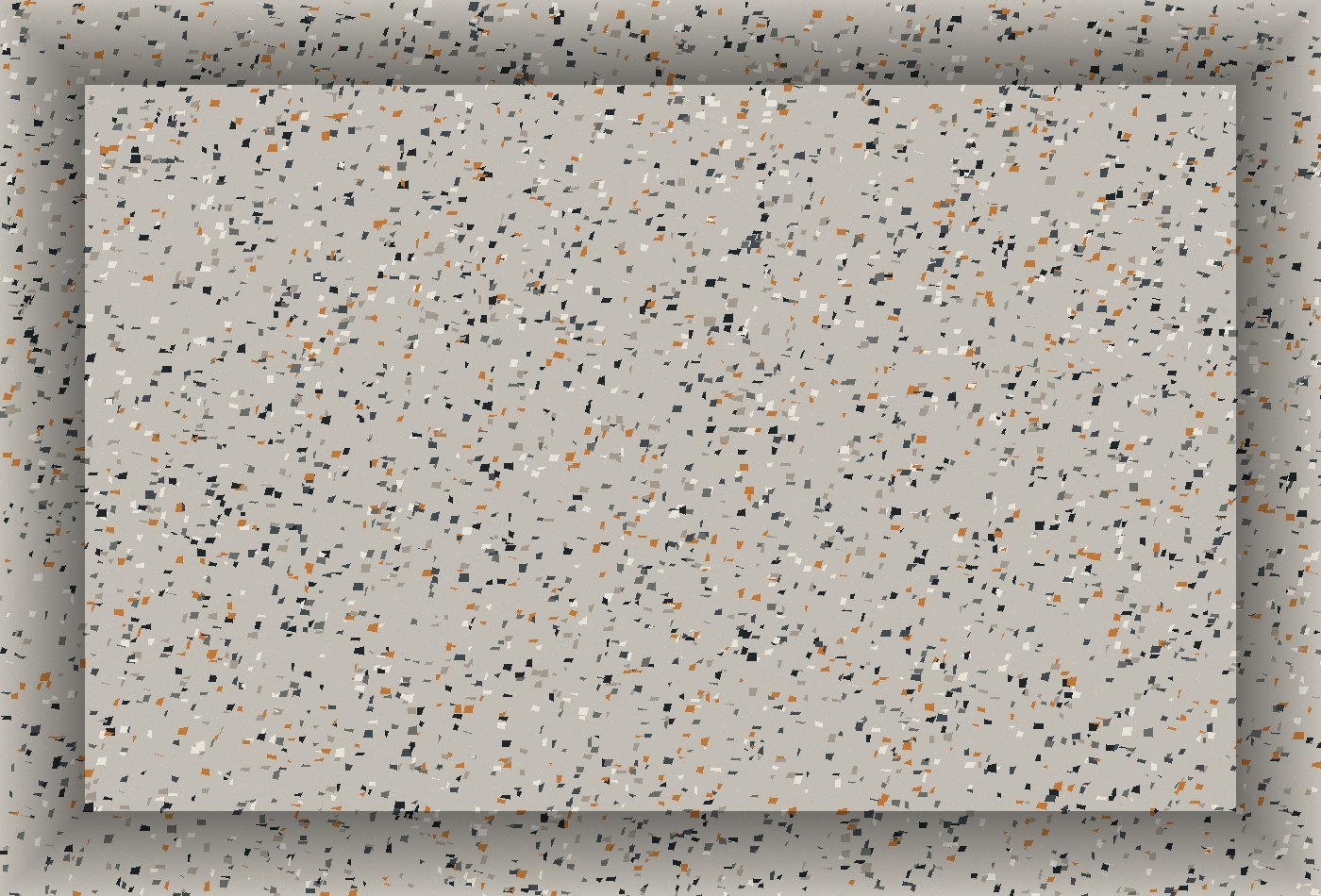
A full-flake broadcast covers much of the base color and creates visual variation, so minor shifts may be less noticeable than on a solid white or light-gray floor. Dark colors can show dust and scratches, while very light clear systems can make ambering more obvious.
Select color with both design and aging in mind. Physical samples viewed in garage lighting are more useful than a small screen image.
Fading, yellowing, chalking, and gloss loss are different
Yellowing is a warm color shift. Fading is loss of pigment intensity. Chalking is a powdery surface breakdown. Gloss loss is gradual dulling from abrasion or weathering. Each can have a different cause and remedy.
Cleaning a test area can help separate dirt film from actual coating change. A contractor should inspect whether the issue is only appearance or involves topcoat deterioration.
Heat alone is not the same as UV radiation
A hot garage can affect installation and cure, but sunlight’s ultraviolet energy is the main driver of ambering in susceptible resins. A shaded garage may be hot without receiving much UV, while a cooler winter sunbeam can still create exposure.
Product selection should consider both temperature range and UV location. Marketing that uses “heat resistant” does not automatically answer color stability.
Outdoor floors require more than a clear UV topcoat
Patios, lanais, and pool decks face direct sun, rain, standing water, temperature cycling, and wet traffic. Every layer, repair material, and joint detail must be suitable for exterior use.
An indoor epoxy base covered with a UV-stable clear may not be approved for full outdoor exposure. Ask for a complete exterior system and examples from similar projects.
Chemical exposure and rubber can cause localized discoloration
Tire compounds, rubber-backed mats, fertilizers, cleaners, and automotive fluids can stain or discolor a clear coat without general UV failure. The pattern and location help identify the cause.
Use compatible mats and cleaners, store chemicals on trays, and remove spills promptly. Test any stain treatment in a small area.
Recoating can refresh appearance when adhesion remains sound
A dull or lightly discolored topcoat may be cleaned, mechanically abraded, and recoated with a compatible product. Severe yellowing in the body coat may remain visible beneath a new clear layer.
Before recoating, identify the existing chemistry and confirm bond. Applying a new topcoat over contamination or an incompatible surface can create delamination.
Warranty language should distinguish normal change from failure
Some warranties exclude fading, ambering, or gloss reduction as normal wear. Others provide specific UV coverage for a named topcoat. Ask for objective language rather than verbal promises that the floor will “never yellow.”
If color is a major priority, document the selected sample and photograph the completed floor under consistent lighting.
St. Augustine sunlight deserves deliberate product selection
Strong Florida sunlight can reach garage entrances, windows, patios, and lanais for long periods. Coastal brightness and open-door living make UV exposure easy to underestimate.
Tell our team which areas are indoors, covered, or fully exposed. The estimate should identify where a UV-stable system is required and how the finish will age.
Project checklist
Color-stability questions for the estimate
- Which layers are UV stable and which may amber?
- Is the entire system approved for the exact indoor or outdoor exposure?
- How will direct sunlight near doors and windows affect appearance?
- Does the warranty cover yellowing, fading, or only adhesion?
- Are rubber mats and common chemicals likely to discolor the finish?
- Can I view physical color and flake samples in natural light?
- What recoat options exist if gloss or color changes later?
Frequently asked questions
Questions homeowners often ask
Does all epoxy turn yellow?
Many standard epoxy formulations can amber under UV, but the degree varies. Pigment and a UV-stable topcoat can reduce visible change.
Will polyaspartic never fade?
Polyaspartic is generally chosen for strong UV stability, but no finish is immune to dirt, abrasion, chemicals, or unlimited weathering.
Can I use epoxy on a patio if it has a polyaspartic topcoat?
Only if the complete system is approved for exterior exposure. A UV-stable topcoat alone does not automatically qualify every base layer.
Can yellowed epoxy be fixed?
A compatible recoat may improve gloss and protection, but deep ambering in the epoxy layer may remain visible unless the system is covered or removed.
Technical references and further reading
Product data sheets and the coating manufacturer’s current instructions control the final installation. These sources provide useful background for comparing proposals.