Quick answer
Concrete contains and transmits moisture. The question is whether the moisture condition is within the limits of the proposed coating system. A newer slab, a slab without a confirmed vapor retarder, a floor with prior blistering, or a garage showing efflorescence deserves more attention than a dry, well-documented slab with a successful coating history.
Not every garage requires the same testing, but moisture should always be considered
Concrete contains and transmits moisture. The question is whether the moisture condition is within the limits of the proposed coating system. A newer slab, a slab without a confirmed vapor retarder, a floor with prior blistering, or a garage showing efflorescence deserves more attention than a dry, well-documented slab with a successful coating history.
A contractor should at least inspect for signs of moisture and ask about drainage, irrigation, flooding, and previous failures. Quantitative testing may be recommended when the risk or cost of failure justifies it.
Surface dryness does not prove the slab is dry internally
The top of a slab can dry quickly after the garage door opens while moisture remains deeper in the concrete. Vapor moves in response to temperature, humidity, and pressure differences. A simple touch test cannot measure that condition.
Plastic-sheet tests and moisture meters can be useful screening tools, but they do not always provide the quantitative data required by a coating manufacturer. The test method should match the decision being made.
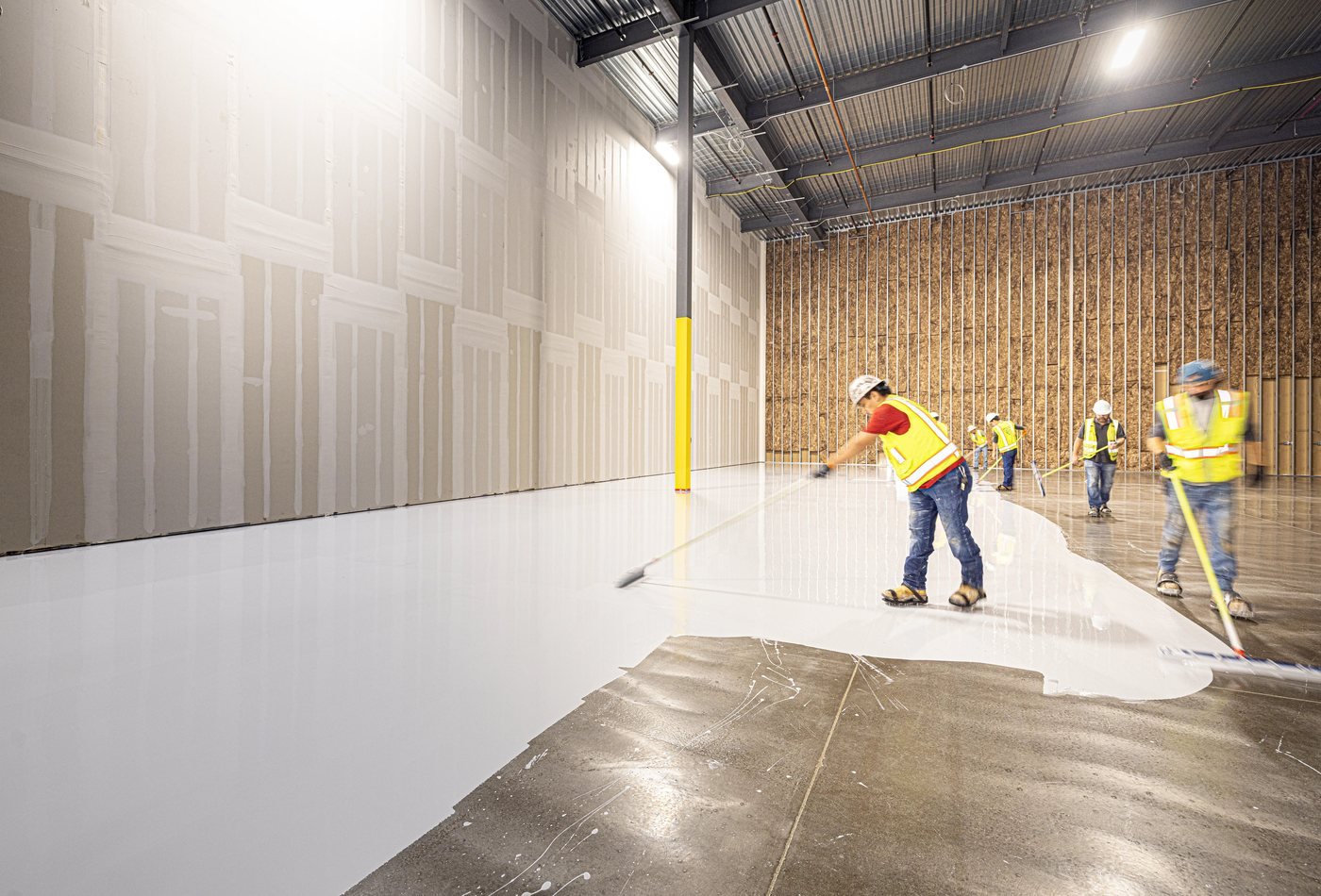
Relative-humidity testing measures conditions inside the slab
ASTM F2170 uses in-situ probes placed in drilled holes to measure relative humidity at a specified depth. The method provides quantitative information about the slab at the test locations and time of measurement.
Results are compared with the moisture limits published for the primer, mitigation layer, or flooring system. A number is not “good” or “bad” by itself; it must be interpreted against the exact product and site conditions.
Calcium-chloride testing estimates vapor emission at the surface
ASTM F1869 is another recognized method used in flooring work. It measures moisture vapor emission over a defined area and time. The method and site conditioning requirements must be followed carefully for useful results.
Different tests measure different aspects of moisture. Contractors should avoid mixing numbers or limits from one method with another. The written proposal should identify the test and acceptance criterion.
Testing is a snapshot, not a lifetime guarantee
Moisture results reflect specific locations and conditions. Seasonal rain, irrigation changes, HVAC use, flooding, plumbing leaks, or drainage work can alter the slab later. ASTM guidance notes that results describe the slab at the time and locations tested.
Testing reduces uncertainty; it does not promise that the moisture condition will never change. Multiple test locations and knowledge of the building improve the decision.
Visible warning signs justify closer evaluation
Dark areas that return after drying, white mineral deposits, damp cracks, blistered old coatings, musty odors, rusting objects, or water entering at walls can signal moisture or drainage issues. Those signs should not be covered without investigation.
Some symptoms have other causes, so testing and inspection work together. For example, bubbles can result from outgassing or mixing as well as moisture. Diagnosis should consider the whole pattern.
New concrete contains construction moisture
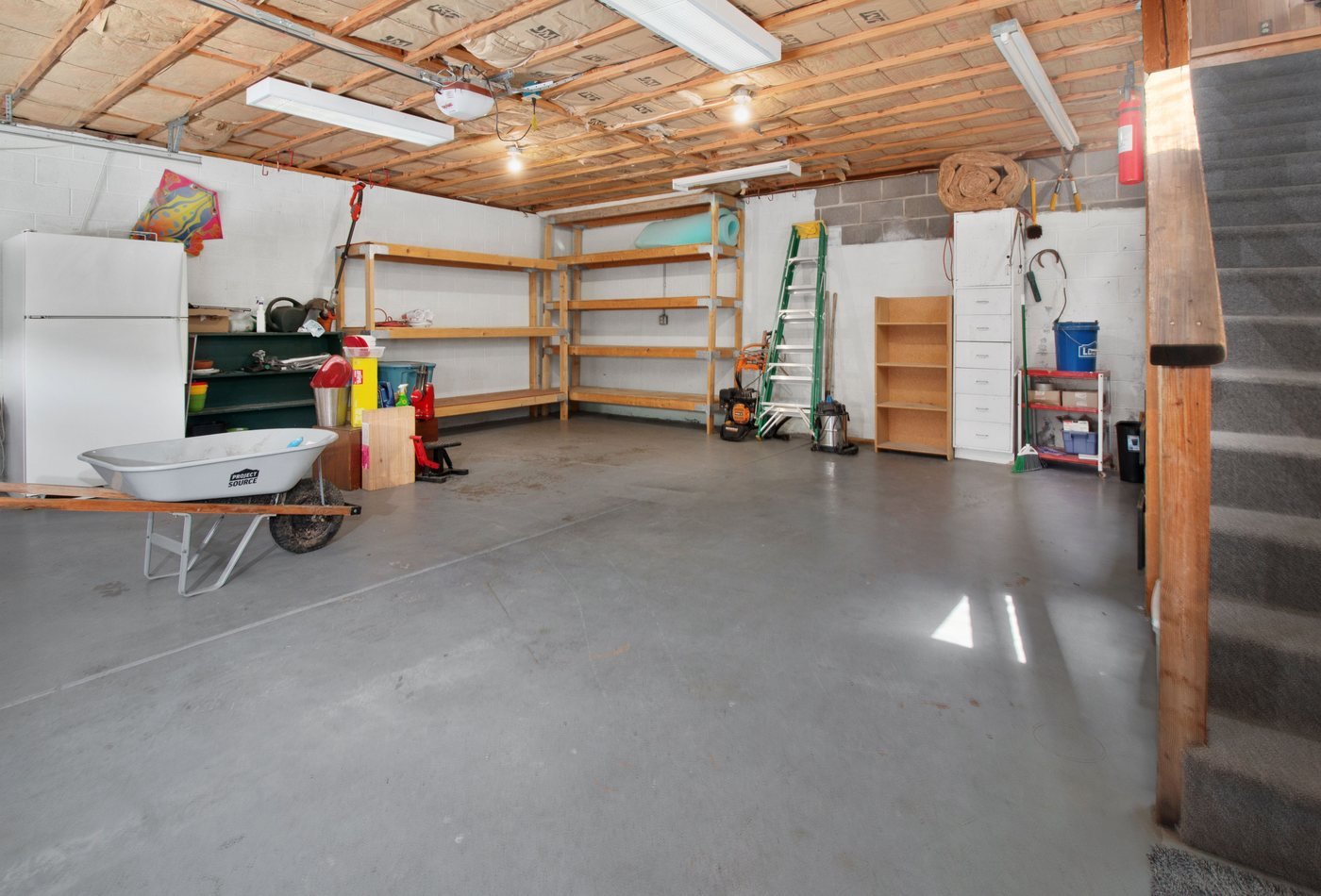
Fresh concrete begins with significant water in the mix and needs time to cure and dry. A generic “28-day rule” does not guarantee that a slab is within the coating’s moisture limits. Thickness, mix design, curing method, weather, and vapor retarder all influence drying.
New construction may also include curing compounds or densifiers that affect adhesion. Moisture testing and mechanical preparation answer different questions and may both be necessary.
Older slabs can still have high vapor transmission
Age alone does not make a slab dry. Older garages may lack an effective vapor retarder, sit near high groundwater, receive irrigation at the perimeter, or have drainage changes. Previous paint failure may provide useful evidence.
A slab can perform acceptably for years and then develop issues after landscaping, storms, plumbing leaks, or enclosure changes. Ask about the property history rather than assuming old concrete is risk-free.
Florida humidity and wet weather increase the importance of context
St. Augustine’s humid air does not automatically mean every slab has excessive internal moisture, but it can affect condensation, drying, and application conditions. Coastal weather, heavy rain, low-lying lots, and irrigation can add site-specific risk.
Slab temperature and dew point also matter during installation. Moisture can condense on a cool floor even when vapor transmission from below is acceptable, so crews should measure jobsite conditions.
Moisture-mitigation products have defined limits and installation requirements
Specialized epoxy or cementitious mitigation systems may be used when measured moisture exceeds the standard coating’s tolerance. They require their own surface preparation, film thickness, coverage, and compatibility rules.
Mitigation is not the same as stopping liquid water. Active leaks, negative hydrostatic pressure, failed drainage, or water entering joints may require building or site corrections before a coating is appropriate.

Testing cost should be weighed against the cost of failure
For a small, low-risk garage with known construction and no warning signs, a contractor may use product-specific screening and professional judgment. For a large project, previous failure, new slab, or suspicious moisture, formal testing can be inexpensive compared with removal and replacement.
Ask who performs the test, how many locations are used, whether the garage must be conditioned, and whether the result is documented. A number without method or context is not useful.
The estimate should connect results to a system decision
Testing should lead to a clear outcome: proceed with the proposed system, change the primer, add mitigation, wait for further drying, correct water intrusion, or decline the project. The contractor should identify the manufacturer’s moisture limit in writing.
Homeowners should keep the results and product documentation with the project records. That information can help with warranty questions or future recoating.
Project checklist
Moisture questions for the contractor
- What signs of moisture did you observe during inspection?
- Do you recommend ASTM F2170, F1869, or another documented method?
- How many test locations are appropriate for the garage?
- What moisture limit applies to the exact primer or coating?
- What happens if the result exceeds that limit?
- Does the warranty exclude moisture-vapor failure?
- Are drainage or liquid-water problems present that coating cannot solve?
Frequently asked questions
Questions homeowners often ask
Can you coat a garage floor without moisture testing?
Sometimes, depending on the slab history, product, risk, and contractor evaluation. Moisture should still be considered, and testing is prudent when warning signs or previous failure exist.
What is a good concrete relative-humidity reading?
There is no universal acceptable number for every coating. Compare the ASTM F2170 result with the exact manufacturer’s published limit for the system.
Will a moisture barrier stop all water problems?
No. Mitigation products address defined vapor conditions; they do not replace drainage repair or stop active liquid water entering through walls, joints, or cracks.
Can a new slab be coated after 28 days?
Possibly, but age alone does not confirm moisture or surface suitability. Testing and product requirements should guide the schedule.
Technical references and further reading
Product data sheets and the coating manufacturer’s current instructions control the final installation. These sources provide useful background for comparing proposals.